

Thoughts, emotions and behaviours · One page
The cognitive triangle
The cognitive triangle shows how thoughts, emotions and behaviours are linked, each affecting the others. So changing a thought can change what you feel and do too.
The triangle
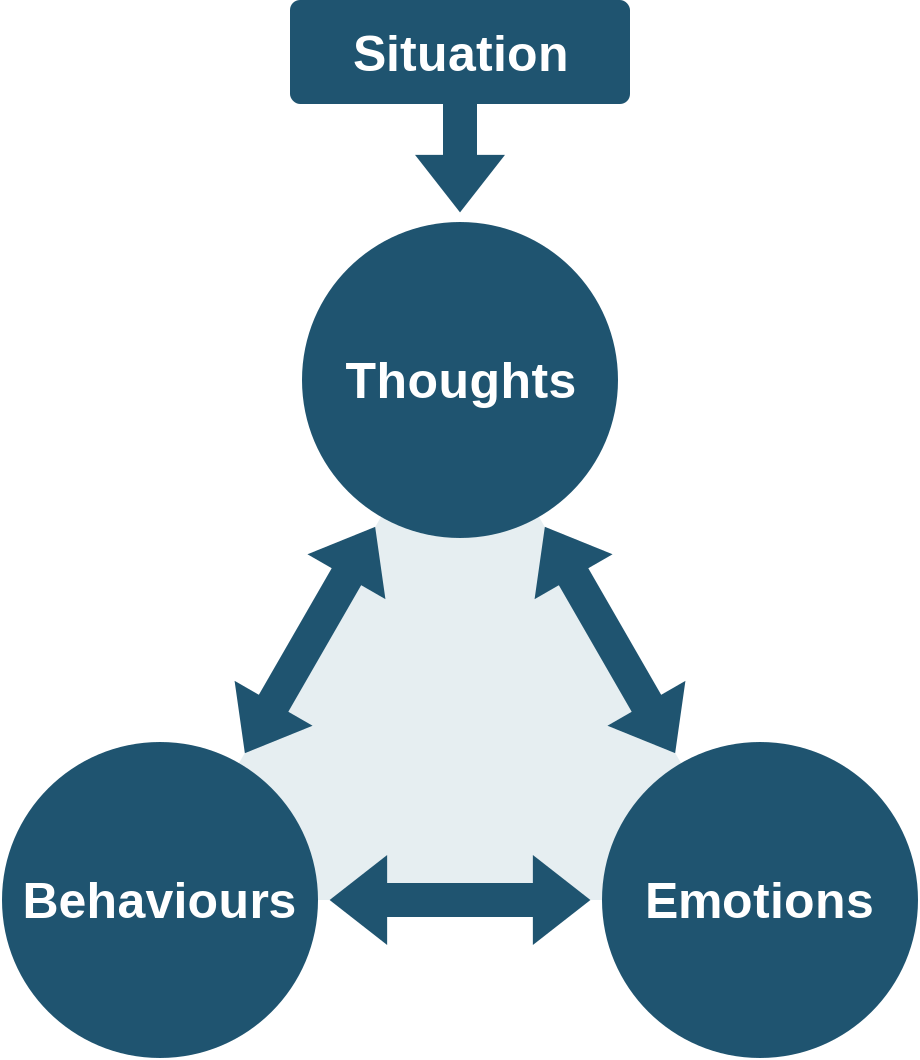
What each part means
Situation
Something that happens, big or small, that sets the triangle going.
Thoughts
The sense you make of a situation. If a friend walks past without saying hello, you might think: “I've upset them” or “They can't have seen me.”
Emotions
What you feel, such as content, low, cross or scared. You can feel them in your body too, like being heavy and tired when you're low, or a knot in your stomach when you're anxious.
Behaviours
What you do about it. That could be something you say or do, or something you decide not to do.
A gentle note
These tools aren't a replacement for counselling or medical care. If something here brings up a lot for you, it's okay to stop. You don't have to work through things on your own.
Counselling near you
I see clients in person at my counselling room in Leigh-on-Sea, and online or by phone anywhere in the UK.
More free resources

The 5-4-3-2-1 grounding technique
A simple exercise that uses your senses to bring you back to the present when anxiety or panic takes hold.

Box breathing
A steady four-count breathing pattern that helps calm your body when you're anxious or stressed.

Grounding techniques menu
A menu of quick ways to come back to the here and now when thoughts, memories or feelings pull you away.
You don't have to work through it alone
If you'd like to talk things through with someone, your first 50-minute session is on me, in person in Leigh-on-Sea, online or by phone.